Web Design vs Digital Marketing Agencies: What Businesses Really Need
Web Design vs Digital Marketing Agencies: What Businesses Really Need
Reading time: 9 minutes
You’ve got a business to run, a budget to protect, and two agencies in your inbox promising to “transform your online presence.” One builds websites. The other runs ads and manages your social feeds. Which one actually moves the needle? Here’s the straight talk: the answer isn’t either-or—it’s understanding what each does, when you need one before the other, and how to avoid paying twice for overlapping work.
Table of Contents
- Web Design Agencies: What They Actually Deliver
- Digital Marketing Agencies: The Growth Engine
- Where the Two Overlap (and Where They Clash)
- Real Business Scenarios
- Comparing Costs, Timelines, and ROI
- Common Challenges and How to Solve Them
- FAQs
- Your Roadmap Forward
Web Design Agencies: What They Actually Deliver
A web design agency’s job is to build the digital storefront—the structure, visuals, and technical foundation your business lives on. In 2026, that means responsive design, Core Web Vitals optimization, accessibility compliance (WCAG 2.2 is now the baseline expectation for enterprise clients), and increasingly, AI-assisted personalization built directly into the front end.
Good web design agencies focus on:
- Information architecture — making sure visitors find what they need in three clicks or fewer
- Conversion-focused UX — layouts engineered around your actual sales funnel, not just aesthetics
- Technical performance — page speed, mobile responsiveness, and clean code that search engines can crawl
- Brand consistency — translating your identity into a cohesive visual system
Where they typically stop: ongoing traffic generation. A beautifully designed site with zero visitors is like opening a gorgeous storefront in a location nobody drives past.
The Hidden Value of Good Web Design
According to a 2025 Adobe study, 38% of users disengage from a website if the layout is unattractive or confusing, and pages that load in under two seconds see conversion rates nearly 3x higher than those loading in five seconds or more. Web design isn’t decoration—it’s infrastructure that determines whether marketing dollars spent elsewhere even have a chance to convert.
Digital Marketing Agencies: The Growth Engine
Digital marketing agencies focus on visibility, traffic, and ongoing engagement. Their toolkit typically includes SEO, paid media (Google Ads, Meta, TikTok, and increasingly retail media networks), email marketing, content strategy, and social management. In 2026, most competitive agencies also layer in AI-driven audience segmentation and predictive analytics to fine-tune ad spend in near real time.
Their core deliverables:
- Traffic acquisition — organic and paid strategies to bring qualified visitors to your site
- Lead nurturing — email sequences, retargeting campaigns, and CRM integration
- Content production — blog posts, video, and social assets aligned with search intent
- Performance measurement — dashboards tracking cost-per-acquisition, ROAS, and lifetime value
Where they typically stop: if your website itself is slow, confusing, or poorly structured, no amount of traffic will convert well. Marketing agencies can drive people to your door, but they can’t fix a broken door.
Why Marketing Alone Often Underperforms
A HubSpot benchmark report from late 2025 found that companies running paid campaigns to outdated or poorly optimized websites saw conversion rates 47% lower than companies who had refreshed their site within the past 18 months. The lesson: marketing amplifies whatever foundation already exists—good or bad.
Where the Two Overlap (and Where They Clash)
Here’s where things get messy. Many full-service agencies now blend both disciplines, and that’s not automatically a bad thing—but it does require scrutiny. SEO, for example, sits at the intersection of design (site structure, speed, schema markup) and marketing (keyword strategy, content, link building). If your web design team doesn’t talk to your marketing team, you end up with a site that looks great but isn’t structured to rank, or a marketing campaign driving traffic to pages that weren’t built to convert.
Pro Tip: Before hiring either type of agency, ask directly: “How do you collaborate with a separate design/marketing partner if we hire one?” Their answer reveals whether they think in silos or systems.
Real Business Scenarios
Scenario 1 — The Local Service Business: A mid-sized HVAC company in Ohio spent $18,000 rebuilding its website in 2025 with a design agency but saw no increase in leads. Why? Nobody was searching for them. Once they added a modest digital marketing retainer focused on local SEO and Google Business Profile optimization, monthly leads rose 62% within four months—the design work finally had traffic to convert.
Scenario 2 — The E-Commerce Startup: A skincare brand launched with a strong Instagram-driven marketing push but a template-based website with a clunky checkout. Cart abandonment sat at 78%. A targeted design overhaul focused purely on checkout UX dropped abandonment to 54% within six weeks, recovering an estimated $22,000 in monthly revenue without increasing ad spend at all.
Scenario 3 — The B2B SaaS Company: A project management software company hired one integrated agency handling both design and marketing under a single roadmap. Because the same team controlled site architecture and SEO content strategy, they avoided the common lag between publishing content and having pages structured to rank—cutting their time-to-first-page-one-ranking from an industry average of 9 months to roughly 5.5 months.
Comparing Costs, Timelines, and ROI
Numbers help cut through the sales pitches. Here’s a realistic comparison based on 2026 market averages for small-to-midsize businesses in the US and UK markets.
| Metric | Web Design Agency | Digital Marketing Agency |
|---|---|---|
| Typical Starting Cost | $5,000–$25,000 (one-time) | $1,500–$8,000/month (retainer) |
| Average Project Timeline | 6–14 weeks | Ongoing, 3–6 months to see traction |
| Primary ROI Metric | Conversion rate, load speed, bounce rate | Traffic growth, ROAS, lead volume |
| Best For | Rebrands, launches, conversion fixes | Visibility, lead generation, brand awareness |
| Risk if Done Alone | Great site, low traffic | High traffic, poor conversion |
Where Businesses Get the Best Return
Data from a 2026 Clutch survey of 500 SMBs found that companies investing in both disciplines—even modestly—reported 2.4x higher year-over-year revenue growth compared to businesses investing heavily in only one. It’s not about spending more; it’s about spending in the right sequence.
Common Challenges and How to Overcome Them
Challenge 1: Choosing Based on Price Alone
The cheapest quote often means template-based design or generic ad management with no strategy behind it. Instead, ask for case studies with measurable outcomes—not just portfolio screenshots. A quality agency should show you data, not just design mockups.
Challenge 2: Hiring Both Without a Shared Roadmap
When design and marketing agencies work in isolation, businesses often pay for redundant strategy sessions or, worse, conflicting recommendations. Solution: designate one internal point of contact who requires both agencies to share a quarterly goals document, even if they’re separate vendors.
Challenge 3: Expecting Instant Results
SEO and content marketing typically take 4–6 months to show measurable traction; design changes show impact faster but plateau without continued marketing support. Set realistic 90-day and 6-month benchmarks with whichever agency you hire, and revisit them honestly.
FAQs
Do I need a web design agency and a digital marketing agency at the same time?
Not necessarily at launch. If you’re starting from scratch, get the website foundation right first, then layer in marketing once the site is conversion-ready. If you already have a functional site with real traffic problems in conversion, marketing support might be your priority instead.
Can one agency do both well?
Some can, especially smaller integrated agencies with cross-functional teams. The key question to ask any full-service agency is whether the same strategists oversee both disciplines or whether it’s two disconnected departments sharing an invoice.
How do I know if my website is the problem or my marketing is?
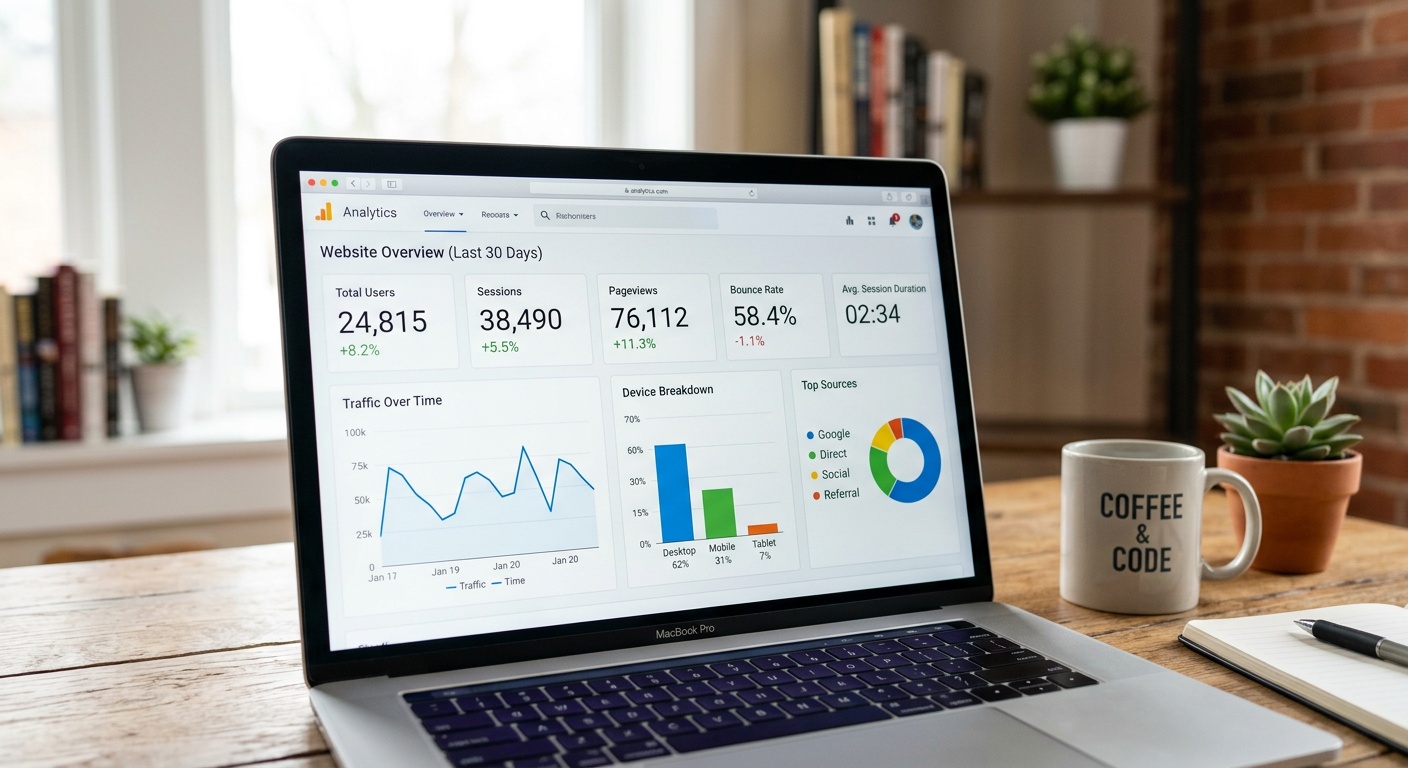
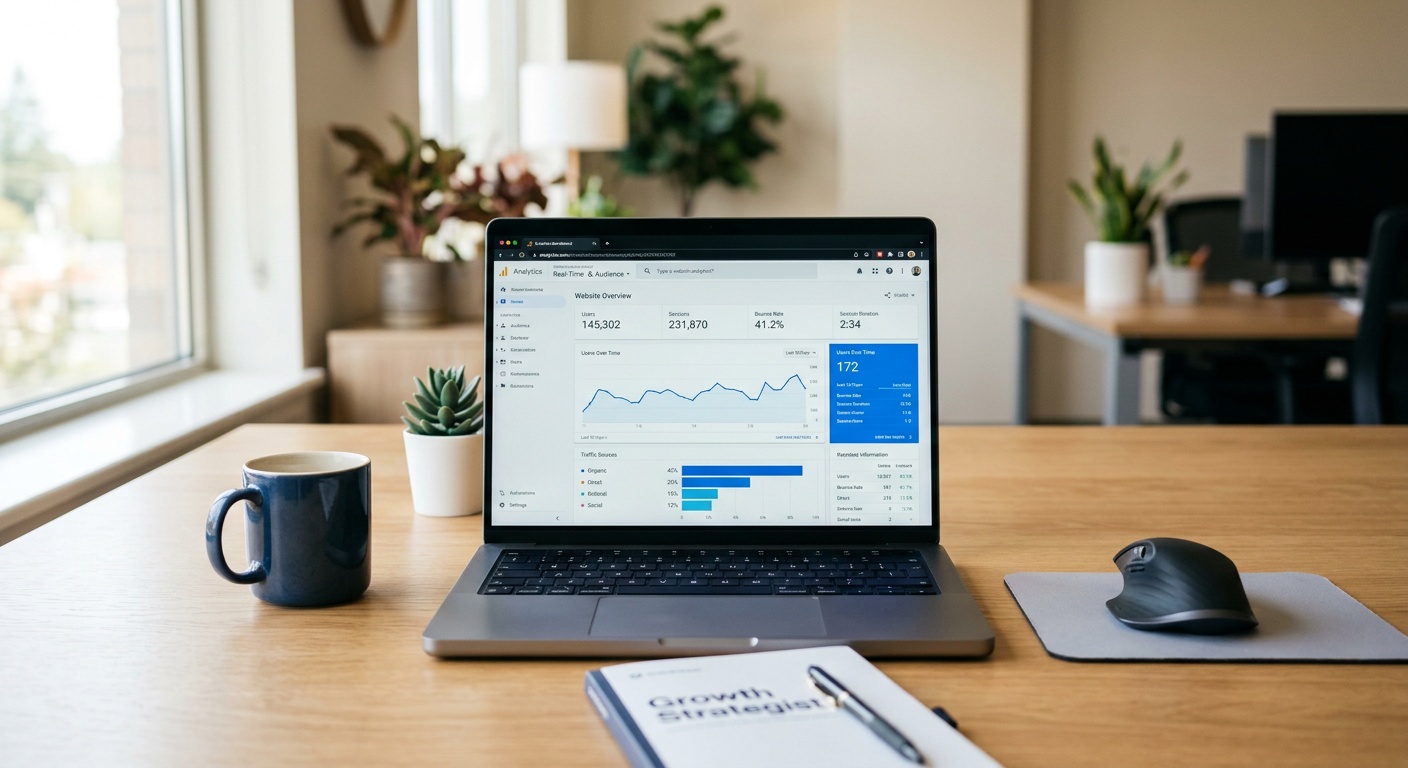
Check your analytics: if traffic is healthy but conversion rates are low (under 1–2% for most industries), the website likely needs work. If traffic itself is low despite a solid site, marketing is your gap. Tools like Google Analytics 4 or Hotjar heatmaps can clarify this within a week of setup.
Your Roadmap Forward
Businesses that treat web design and digital marketing as competing line items usually lose money twice—once on a site nobody sees, and once on traffic that never converts. The smarter approach in 2026’s increasingly AI-integrated digital landscape is sequential investment guided by data, not sales pitches.
- Step 1: Audit your current site’s conversion rate and load speed before spending another dollar on ads.
- Step 2: If the site underperforms, fix design and UX issues first—even minor ones—before scaling traffic.
- Step 3: Once conversion is solid, invest in a marketing partner with transparent, measurable KPIs.
- Step 4: Require quarterly alignment meetings between both partners, even if they’re different companies.
- Step 5: Reassess every six months—what worked at launch rarely stays optimal as your business scales.
The businesses winning right now aren’t the ones who picked the “better” agency type—they’re the ones who understood their own gap first. So, where’s your actual bottleneck: nobody’s finding you, or nobody’s converting once they arrive?